The Mountains Don't Care About Your Calendar
Hoover Wilderness, CA — Barney Lake
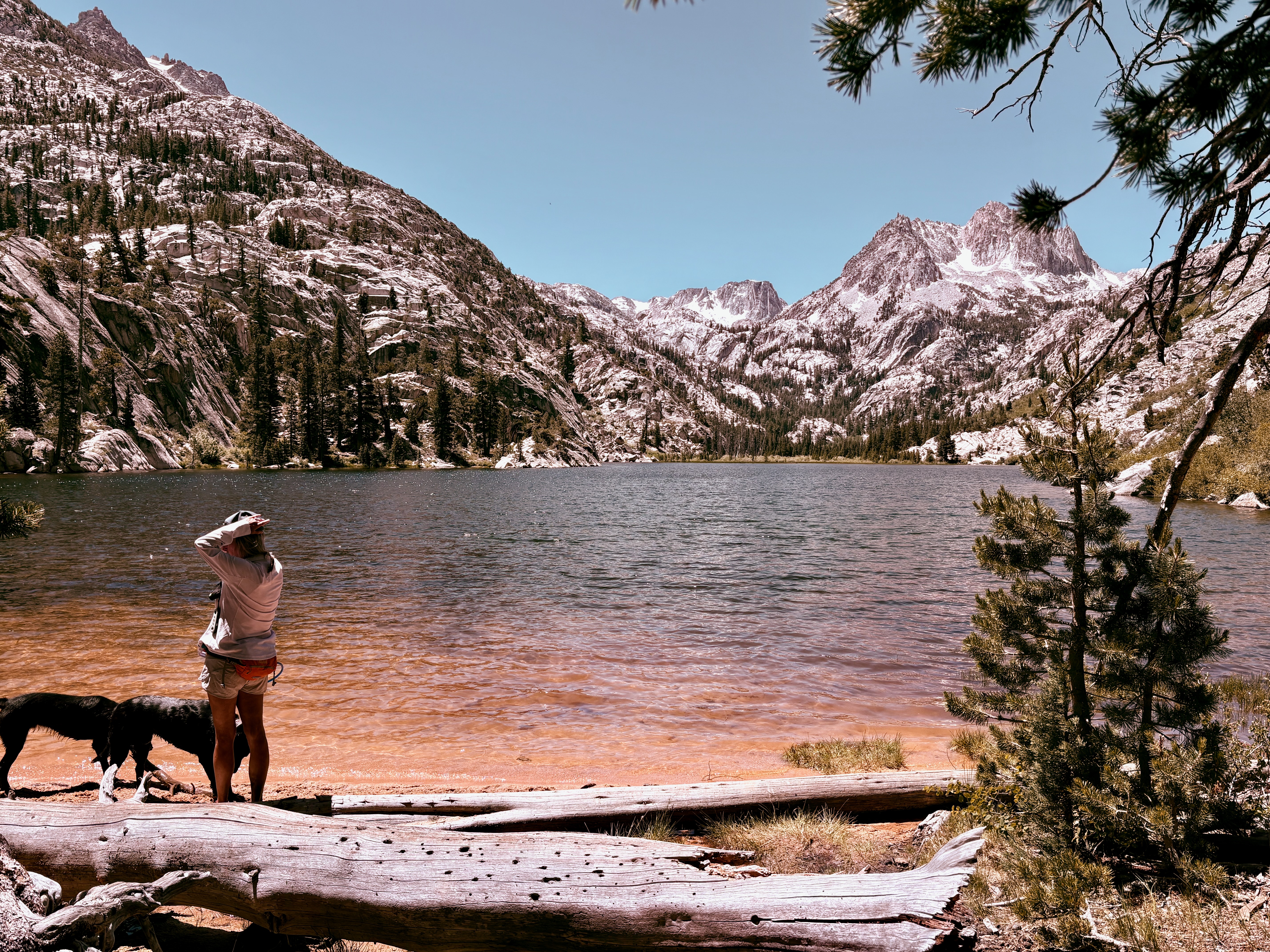
There's a specific kind of quiet that exists above 9,000 feet, and you don't remember it until you're standing in it again. Not silence exactly — the wind moves through the pines, water runs somewhere below you, a marmot calls from a boulder — but all of it feels purposeful. Nothing wasted. Nothing performative. You start to wonder why everything else in your life doesn't feel that way.
I spent a few days backpacking in the Hoover Wilderness earlier this month, camping near Barney Lake. The Hoover sits just east of Yosemite's boundary, tucked in the eastern Sierra near Twin Lakes, and most people drive past it chasing the more famous destinations. That's their loss.
The approach into Barney Lake follows Buckeye Creek through aspens before the granite walls close in on both sides, narrowing the world down to a corridor of polished rock and cold, impossibly clear water. By the time the lake opens up in front of you, you've already shed something. You just haven't named it yet.
Wife & I set up camp and just sat for a while. That's harder than it sounds. I'm not built for stillness. I check my phone on autopilot, I have a running list of things I should be doing, my brain defaults to planning the next thing before I've finished the current one. But at Barney Lake, you run out of things to plan. The tent is up. The water is filtered. Dinner is dehydrated something (Beef stroganoff). The day's objective, in its entirety, is to not fall into the lake.
And in that void, something useful happens.
The stuff that had felt urgent started to look small. The meetings I'd been dreading. The metrics I'd been obsessing over. The version of success I'd been benchmarking myself against without ever stopping to ask whether I actually wanted it. All of it sitting there at a lower elevation, getting smaller the longer I stayed up here.
I've heard people call this perspective. I think that's too clean a word. What it actually feels like is more like an audit. The mountains hand you silence and space, and your brain, without anything to react to, starts sorting. This matters. This doesn't. This is something I'm doing because I care about it. This is something I'm doing because I'm afraid of what happens if I stop.
The second morning I hiked higher, above the lake and into the basin, moving on scree toward a ridgeline with no particular destination. Just moving. The granite up here is white and bone-dry, fractured into shapes that look almost deliberate, like something enormous made decisions about it. Your footing demands attention. You can't ruminate when you have to watch where you're stepping. Your brain quiets to a single frequency, just your body and the terrain negotiating with each other. It's the closest I've come to meditation, and it works because it's not trying to be meditation.
I turned around at a rocky bench with a view back down into the Barney Lake drainage, the whole thing laid out below me: the dark blue of the water, the green smear of willows at the inlet, the ridgeline I'd come in through. There was nobody else visible. Just the landscape doing what it always does, completely indifferent to whether I was watching.
That indifference is the point, I think. The mountains don't care about your job title or your follower count or your Q3 pipeline. They're not impressed by hustle. They don't reward anxiety. They just sit there, enormous and quiet, and they make everything you brought with you feel optional.
I came down from the ridge with a short list in my head. Not a to-do list. More like a clarity list. The handful of things that, if I'm being honest with myself, actually move the needle on the life I want to be living. The relationships that matter. The work that means something. The physical stuff — being outside, being in my body, not treating rest like something to be earned.
The list was short. It always is, when you get honest.
Most of us already know what's important. The problem isn't knowledge, it's attention — we let the noise eat the signal until we can barely hear it anymore. A few days in the Hoover Wilderness doesn't solve that permanently. But it turns the volume back up long enough to remind you what the signal sounds like.